


The Economics of Running a Distillery in India: Costs, Compliance & Profit
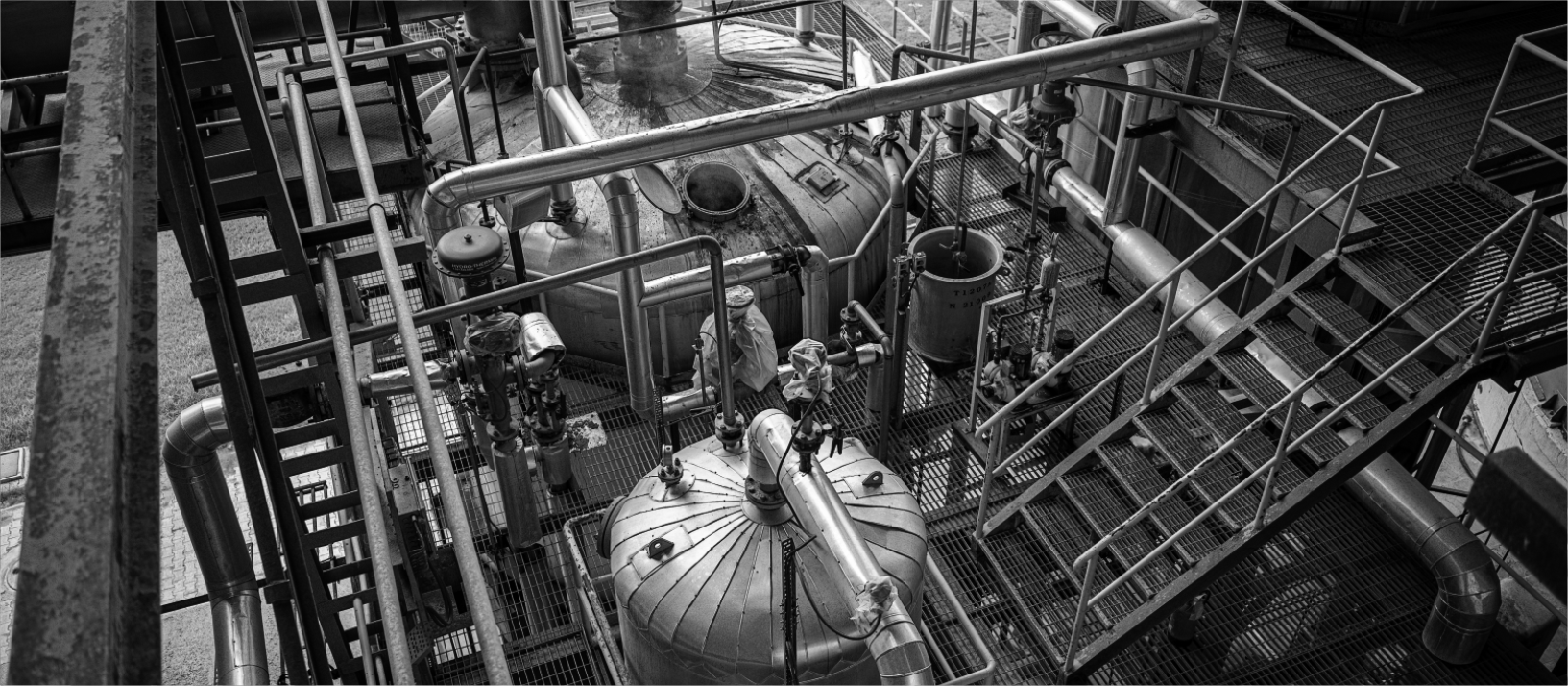
India is one of the largest and fastest-growing spirits markets in the world. With a population of over a billion people, a rising middle class, and an increasing appetite for quality beverages, the business case for running a distillery in India has never looked stronger. Yet behind every bottle of whisky, gin, or vodka lies a complex web of capital investment, regulatory compliance, operational costs, and revenue strategy. Understanding the full economics of the business is what separates distilleries that thrive from those that merely survive.
The Capital Investment: What It Really Takes to Start
Setting up a distillery in India is not a light undertaking. The initial capital expenditure depends heavily on the scale of operations, the type of spirits being produced, and the state in which the facility is located.
A grain-based distillery of moderate capacity, say 60 to 120 KLPD (kilolitres per day), typically requires an investment ranging from ₹50 crore to ₹200 crore or more. This covers land acquisition, civil construction, fermentation tanks, distillation columns, effluent treatment plants (ETPs), and utility infrastructure like boilers and cooling towers.
Beyond equipment, the location decision carries significant financial weight. States like Punjab, Rajasthan, Uttar Pradesh, and Maharashtra have relatively developed industrial ecosystems for spirits production, meaning better access to raw materials, skilled labour, and logistics networks. Many of the best distilleries in India are strategically situated near grain belts or major transportation corridors to reduce input and distribution costs.
Working capital is another major consideration. Distilleries need to maintain large grain inventories, keep their fermentation cycles running continuously, and manage the lag between production and sale, which can stretch from weeks to several months depending on the product and excise regulations.
The Cost Structure: Breaking Down the Expenses
Once operational, a distillery's cost structure broadly falls into four buckets.
Raw materials are the largest variable cost. Grain, typically broken rice, maize, or barley, often accounts for 40 to 55 percent of production cost. Prices fluctuate with agricultural seasons, monsoon patterns, and government procurement policies, making hedging and long-term supplier relationships a critical discipline.
Utilities represent the second major cost centre. Distillation is an energy-intensive process. Steam, electricity, and water consumption are substantial. Efficient boiler management, co-generation systems, and water recycling can meaningfully bring down utility costs over time. Distilleries that invest in energy optimisation often gain a significant competitive edge.
Labour and operations constitute the third bucket. Skilled distillers, chemists, and technicians command competitive salaries, and total workforce costs including contract labour can be significant in large plants. Automation has helped larger distilleries manage this better over time.
Compliance and excise round out the four. This is where Indian distillery economics become uniquely complex. Alcohol in India is a state subject, meaning each state sets its own excise duty structure, production quotas, pricing regulations, and distribution rules. A distillery operating across multiple states must navigate multiple compliance regimes simultaneously, each with its own reporting requirements, inspection protocols, and fee structures.
The Regulatory Maze: Compliance Is Not Optional
Operating distillery operations in India means working within one of the most regulated industries in the country. Licences required typically include a distillery licence from the state excise department, environmental clearances from the State Pollution Control Board, FSSAI registration for food safety, and various labour and factory act compliances.
The effluent treatment obligation deserves special mention. Distillery operations generate spent wash, a highly polluting by-product. Proper treatment through bio-methanation, composting, or evaporation systems is both a legal requirement and a significant operational cost. Non-compliance can result in heavy fines or closure orders, making ETP investment non-negotiable.
Excise duty is arguably the most significant compliance burden. In most states, excise duty accounts for 40 to 60 percent of the final consumer price of spirits. Distilleries must accurately track, report, and pay these duties on every litre produced and sold, often in real time through state-mandated track-and-trace systems.
Smart alcohol manufacturing companies in India treat compliance not just as a cost centre but as a competitive moat. Those who build robust regulatory teams and digital compliance infrastructure find it far easier to scale across states and secure institutional clients.
Revenue Streams: More Than Just the Spirit
A well-run distillery does not depend on a single revenue line. The most economically resilient operations have learned to monetise multiple outputs from the same production process.
Extra Neutral Alcohol (ENA) is the primary product for most grain-based distilleries, and it commands consistent demand from IMFL brands, institutional buyers, and even pharma companies. Rajasthan Liquors Limited (RLL), for instance, operates a 120 KLPD grain-based distillery in Derabassi, Punjab, supplying high-quality ENA to clients including renowned names like Seagram. This is a testament to how institutional B2B sales can provide stable, volume-driven revenue.
Beyond ENA, distilleries generate valuable by-products. Distillers Dried Grains with Solubles (DDGS) is a protein-rich animal feed that finds strong demand in the dairy and livestock sector. Carbon dioxide (CO₂), released during fermentation, can be captured, compressed, and sold to the food and beverage or industrial sector, or further processed into dry ice for commercial use. These by-product revenue streams, while secondary, can meaningfully improve overall margins and reflect a commitment to zero-waste, sustainable operations.
For distilleries with brand ambitions, the premium IMFL segment offers substantially higher margins than ENA sales. A bottle of premium whisky sold at ₹1,500 carries a very different margin profile compared to bulk ENA at commodity prices. This is why many distilleries pursue a dual strategy, using ENA sales for volume and cash flow stability while building branded spirits for margin improvement over the long term.
The Profitability Equation: Where Does the Money Come From?
EBITDA margins in the Indian distillery business typically range from 12 to 22 percent for well-run operations, though this varies significantly based on state regulations, product mix, and operational efficiency.
The biggest profitability lever is scale. A 120 KLPD plant does not cost twice as much to run as a 60 KLPD plant. Fixed costs in civil infrastructure, management, and compliance are largely constant, meaning larger volumes dramatically improve per-litre economics.
The second lever is integration. Distilleries that also operate their own bottling units, manage their own distribution, or own brands at the consumer level capture more of the value chain. This is precisely the model that the strongest distillery operations in India have pursued, moving from pure ingredient supplier to vertically integrated spirits company.
The Road Ahead
India's spirits market is projected to grow strongly through the rest of this decade, driven by demographic tailwinds, premiumisation trends, and expanding urban consumption. State governments, increasingly recognising the excise revenue potential of a well-regulated industry, are also gradually simplifying licensing frameworks in several regions.
For entrepreneurs and investors evaluating this space, the economics are genuinely attractive, but only for those who enter with a clear understanding of the capital requirements, the regulatory complexity, and the operational discipline required. The distilleries that are building lasting businesses in India are not just good at making spirits. They are good at managing costs, navigating compliance, diversifying revenue, and scaling with precision.
That combination of craft and commercial rigour is ultimately what defines success in this industry, and it is what the best distilleries in India have quietly mastered over decades of operation.
FAQS
1. How much does it cost to set up a distillery in India?
The investment required depends on the scale and location of the facility. A mid-sized grain-based distillery with a capacity of 60 to 120 KLPD can require anywhere between ₹50 crore and ₹200 crore, covering land, equipment, effluent treatment infrastructure, and working capital.
2. What licences are needed to operate a distillery in India?
A distillery must obtain a distillery licence from the state excise department, environmental clearances from the State Pollution Control Board, FSSAI registration, and compliance certificates under the Factories Act and relevant labour laws. Since alcohol regulation is a state subject, licence requirements vary from one state to another.
3. What is Extra Neutral Alcohol (ENA) and why does it matter?
ENA is a highly purified form of alcohol produced in grain-based distilleries and serves as the base ingredient for most IMFL spirits including whisky, gin, and vodka. It is also used in the pharmaceutical and cosmetics industries. For many distilleries, ENA sales to institutional buyers form the backbone of their revenue model.
4. How do distilleries improve profitability beyond alcohol sales?
The most efficient distilleries monetise every output of the production process. By-products such as Distillers Dried Grains with Solubles (DDGS), used as cattle feed, and captured CO₂, sold to industrial or food and beverage clients, add meaningful secondary revenue streams that improve overall margins without increasing production costs.
5. What is the biggest challenge in running a distillery in India?
Regulatory complexity is widely considered the biggest challenge. Because each state governs its own excise policy, pricing, and distribution rules, distilleries operating across multiple states must manage several compliance frameworks simultaneously. Excise duty alone can account for 40 to 60 percent of the consumer price of spirits, making compliance management as important as the production process itself.

 English
 Arabic
 Spanish
 Portuguese
 Deutsch
 Turkish
 Dutch
Dutch
 Italiano
 Russian
 Romaian
 Portuguese (Brazil)
 Greek
Greek
