


The Ultimate Guide to Amla for Hair: 4 DIY Hair Mask Recipes for Growth and Shine | Aroma Monk
When it comes to traditional Indian beauty rituals, few ingredients have remained as popular as amla. Also known as Indian gooseberry, this botanical ingredient has been used for generations as part of natural hair care routines. From homemade masks to commercial shampoos and hair oils, amla continues to be a popular choice for people interested in botanical beauty.
One particularly versatile ingredient is Amla Seed Oil, which can be incorporated into hair oil treatments, scalp care, conditioning masks, and professional cosmetic formulations. Its oil-based format makes it easy to combine with other popular ingredients such as coconut oil, aloe vera, yogurt, and fenugreek.
If you're looking for practical ways to introduce amla into your routine, this guide from Aroma Monk covers the potential role of Amla Seed Oil along with four easy DIY hair mask recipes for softer, shinier, healthier-looking hair.
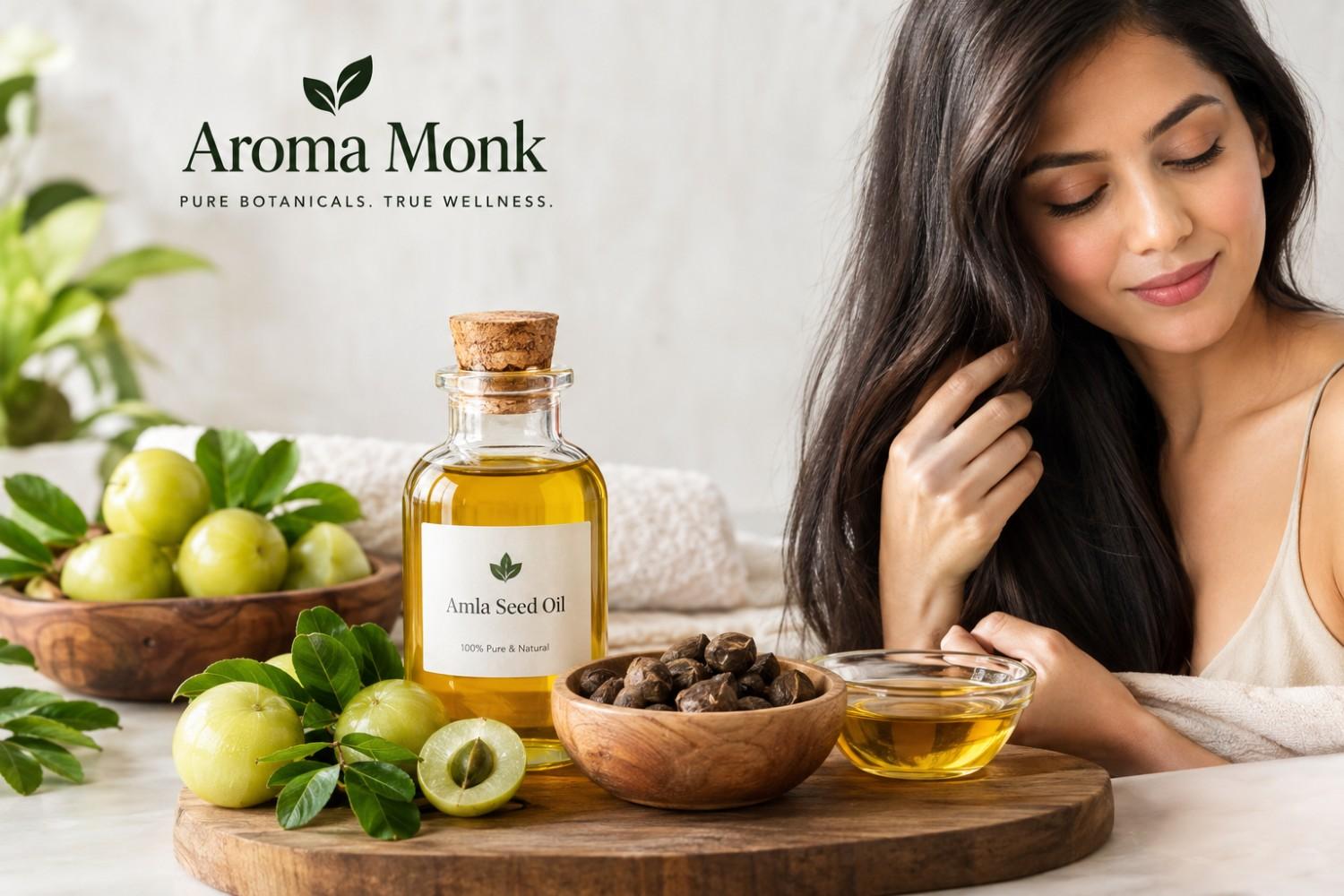
What Is Amla Seed Oil?
Amla Seed Oil is a botanical oil derived from the seeds of the amla fruit, scientifically known as Phyllanthus emblica. Amla has a long history in traditional Indian and Ayurvedic hair care, where different parts of the fruit have been incorporated into various herbal hair care preparations.
Unlike amla powder or fresh amla, Amla Seed Oil provides an oil-based ingredient that can easily be incorporated into hair oil blends, scalp treatments, conditioners, and DIY masks.
Its versatility also makes it interesting for cosmetic manufacturers developing natural hair products, botanical hair oils, scalp serums, conditioners, and other personal-care formulations.
Why Is Amla Popular for Hair Care?
Amla has become a staple ingredient in many Indian hair care traditions. Although no single botanical ingredient can guarantee hair growth, amla-based treatments can complement a consistent routine focused on maintaining the appearance and feel of healthy hair.
Supports Hair Conditioning
Oil-based treatments can help hair feel smoother and softer. Amla Seed Oil can be incorporated into a deep conditioning hair treatment or pre-shampoo oiling routine.
Applying an appropriate amount to dry lengths and ends may help improve manageability and reduce the rough feeling associated with dry hair.
Complements Scalp Care
A healthy-looking scalp is an important part of an effective hair care routine. Gentle scalp massage is commonly included in scalp oiling practices.
When combined with a suitable carrier oil, Amla Seed Oil can be used as part of an occasional scalp massage and conditioning routine.
Helps Create Shinier-Looking Hair
Dry, rough strands can often appear dull. Conditioning treatments can help hair look smoother, which may contribute to a healthier-looking shine.
For this reason, amla-based treatments are often included in hair shine treatments and natural hair care routines.
Works With Other Botanical Ingredients
Another advantage of Amla Seed Oil is that it can be combined with other ingredients. Coconut oil, jojoba oil, aloe vera, yogurt, and fenugreek are frequently used in DIY and botanical hair care routines.
Amla Seed Oil for Hair Growth: What Should You Know?
One of the most popular searches surrounding amla is amla oil for hair growth. However, it's important to distinguish traditional hair-care practices from scientifically established treatments for hair loss.
Hair growth is influenced by genetics, hormones, age, nutrition, health, and the condition of individual hair follicles. Therefore, an oil or homemade hair mask should not be considered a guaranteed solution for hair growth or hair loss.
That said, a consistent routine involving scalp care, gentle handling, cleansing, conditioning, and protection against excessive breakage can help maintain healthier-looking hair.
Amla Seed Oil can therefore be viewed as a conditioning ingredient that complements a broader hair strengthening routine, rather than a miracle hair-growth treatment.
4 DIY Amla Hair Mask Recipes
Ready to try amla in your own hair-care routine? These four recipes combine Amla Seed Oil with familiar botanical and kitchen ingredients.
1. Amla Seed Oil and Coconut Oil Hair Mask
Coconut oil has long been associated with traditional hair oiling practices. Combining it with Amla Seed Oil creates a simple treatment for people who prefer oil-based conditioning.
Ingredients
- 1 tablespoon Amla Seed Oil
- 1 tablespoon coconut oil
Directions
Add both oils to a clean bowl and mix thoroughly. Warm the mixture slightly by rubbing it between your palms rather than overheating it.
Apply the oil to your scalp and hair lengths. Use your fingertips to gently massage the scalp, then distribute the remaining oil through the mid-lengths and ends.
Leave it on for approximately 30–60 minutes before washing with a mild shampoo.
This treatment can be incorporated into a weekly hair oiling routine for people who want additional conditioning and softness.
2. Amla Seed Oil and Yogurt Hair Mask
If you prefer a creamy DIY hair mask, yogurt provides a convenient base for combining with Amla Seed Oil.
Ingredients
- 1 tablespoon Amla Seed Oil
- 2 tablespoons plain yogurt
- 1 teaspoon honey
Directions
Combine the ingredients in a clean bowl and mix until you have a smooth consistency.
Apply the mask evenly to your scalp and hair. If your scalp becomes oily easily, focus primarily on the mid-lengths and ends.
Leave the mixture on for approximately 20–30 minutes before rinsing thoroughly and shampooing.
This recipe combines Amla Seed Oil with ingredients commonly found in moisturizing hair treatments and can be particularly appealing for dry or dull-looking hair.
3. Amla, Aloe Vera, and Jojoba Oil Hair Mask
Aloe vera is a popular ingredient in hydrating hair treatments because of its lightweight gel texture. Jojoba oil can also provide an oil-based conditioning component without making the mixture excessively heavy.
Ingredients
- 1 tablespoon Amla Seed Oil
- 2 tablespoons pure aloe vera gel
- 1 teaspoon jojoba oil
Directions
Mix the aloe vera gel, jojoba oil, and Amla Seed Oil thoroughly.
Apply the mixture to the scalp and hair, paying particular attention to dry or rough areas.
Leave it on for approximately 20–30 minutes, then rinse and shampoo thoroughly.
This recipe works well as part of a hair hydration routine and provides a lighter alternative to heavier oil masks.
4. Amla and Fenugreek Hair Mask
Fenugreek, also called methi, is another traditional ingredient associated with Ayurvedic hair care. It can be combined with Amla Seed Oil and aloe vera to create a botanical hair mask.
Ingredients
- 1 tablespoon Amla Seed Oil
- 1 tablespoon fenugreek powder
- 2 tablespoons aloe vera gel
- Small amount of water
Directions
Mix the fenugreek powder and aloe vera gel together. Add a small amount of water until the mixture develops a smooth, spreadable consistency.
Add Amla Seed Oil and mix thoroughly.
Apply the mask to your scalp and hair. Allow it to sit for around 20–30 minutes before rinsing thoroughly.
This combination brings together several traditional herbal hair care ingredients and can be used as an occasional conditioning treatment.
How Often Should You Use an Amla Hair Mask?
Using an amla hair mask once a week is a reasonable starting point for many people. However, the ideal frequency depends on your hair type, scalp condition, hair texture, and existing routine.
If you have an oily scalp, you may prefer less frequent oil treatments. People with dry or coarse hair may find that occasional conditioning treatments fit more comfortably into their routine.
Avoid applying excessive amounts of Amla Seed Oil simply because a larger quantity does not necessarily mean better results.
Consistency and appropriate application are more important than saturating the scalp and hair with oil.
Amla Seed Oil for Different Hair Types
Different hair types may benefit from different application methods.
For dry hair, apply a small amount of Amla Seed Oil to the mid-lengths and ends as a pre-shampoo conditioning treatment.
For oily hair, use a smaller quantity and avoid leaving heavy oil on the scalp for prolonged periods.
For curly hair or textured hair, Amla Seed Oil can be incorporated into a conditioning routine alongside suitable carrier oils.
For normal hair, an occasional amla oil treatment can complement regular shampooing and conditioning.
Tips for Using Amla Seed Oil in Your Hair Routine
Getting the most from a botanical ingredient starts with using it appropriately. Keep these tips in mind:
- Start with a small quantity of Amla Seed Oil.
- Perform a patch test before extensive application.
- Massage the scalp gently without scratching.
- Avoid applying products to irritated or damaged skin.
- Wash oil-based treatments out thoroughly.
- Avoid using too many heavy products at once.
- Prepare homemade masks fresh rather than storing them for extended periods.
- Choose ingredients appropriate for your hair and scalp type.
These simple habits can help you create a more consistent natural hair care routine.
How to Choose Quality Amla Seed Oil
If you're purchasing Amla Seed Oil, ingredient quality should be one of your primary considerations.
Look for information about botanical identity, sourcing, processing or extraction methods, purity, testing, packaging, storage, and supplier reliability.
For consumers making DIY hair treatments, a quality-focused ingredient can provide greater confidence in what they are adding to their routine.
For manufacturers, quality becomes even more important. Businesses developing cosmetic hair care products need dependable raw materials with consistent specifications for formulation and production.
Aroma Monk supplies botanical and essential oil ingredients for businesses interested in personal-care, cosmetic, and natural beauty product formulations.
Whether you're developing a botanical hair oil, scalp serum, conditioner, shampoo, or professional hair mask, choosing appropriate raw materials is an important part of successful product development.
Why Choose Amla Seed Oil for Hair Care?
The versatility of Amla Seed Oil makes it suitable for several types of hair-care applications. It can be used in pre-shampoo oil treatments, blended with other carrier oils, or incorporated into DIY conditioning masks.
Its compatibility with ingredients such as coconut oil, aloe vera, yogurt, and fenugreek also makes it useful for people experimenting with botanical hair treatments.
Beyond home use, Amla Seed Oil has potential applications in commercial hair care formulations, including hair oils, conditioners, masks, scalp products, and other personal-care products.
For brands searching for reliable botanical ingredients, Aroma Monk can be explored as a sourcing option for cosmetic and personal-care formulations.
Final Thoughts
Amla continues to hold an important place in traditional Indian beauty practices, and its versatility has helped it transition into modern natural hair care routines.
From a simple coconut oil treatment to an aloe vera or fenugreek mask, there are several ways to incorporate Amla Seed Oil into a hair-care regimen.
While Amla Seed Oil should not be considered a guaranteed treatment for hair loss or accelerated hair growth, it can be a useful conditioning ingredient within a balanced routine.
For cosmetic manufacturers and brands, its versatility also makes it an interesting ingredient for botanical hair care products, natural hair oils, scalp treatments, conditioners, and hair masks.
With quality ingredients, appropriate application, and consistent hair-care habits, amla can become a valuable part of a routine focused on soft, manageable, and healthy-looking hair.
For businesses interested in botanical raw materials, Aroma Monk provides ingredients suitable for exploring innovative cosmetic formulations and personal care products.

 English
 French
 Spanish
 Portuguese
 Deutsch
 Turkish
 Dutch
Dutch
 Italiano
 Russian
 Romaian
 Portuguese (Brazil)
 Greek
Greek
